

The Sourdough Mama: dove l’impasto diventa incanto ✨

Want to read in English?
👉 click here to jump to the English version!
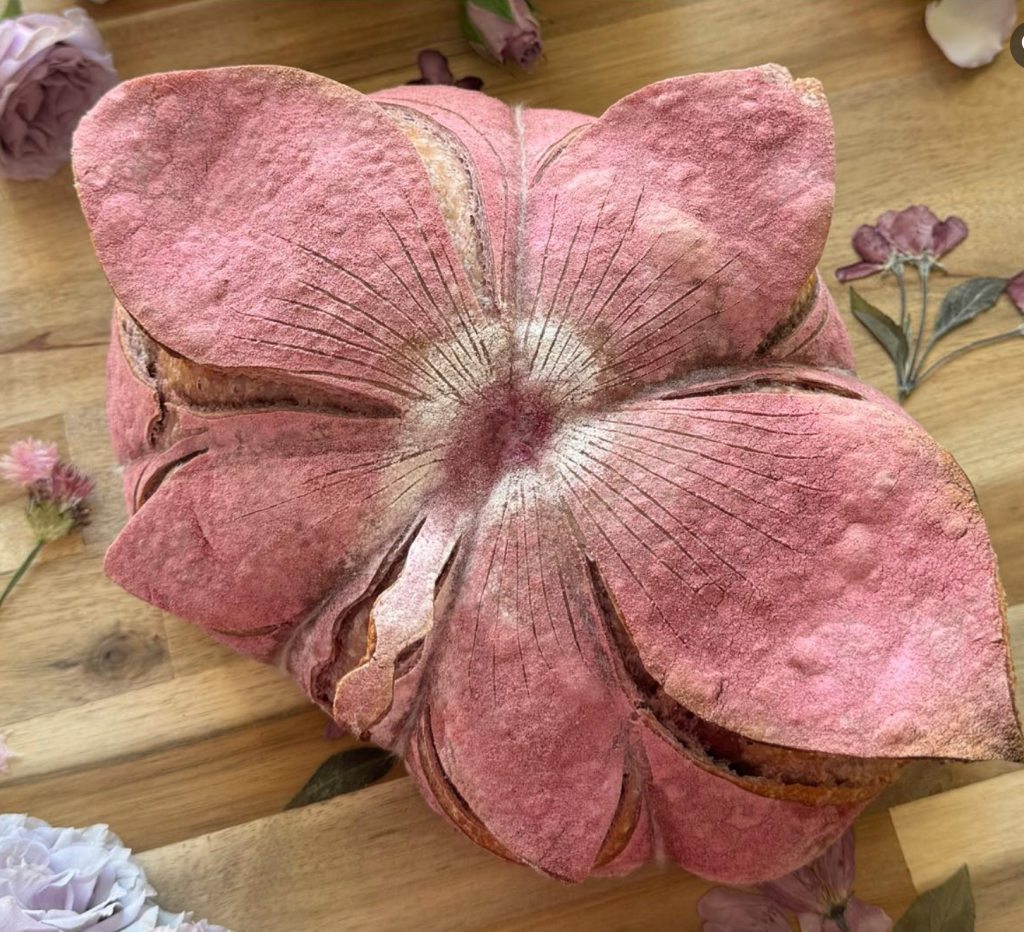
Ci sono persone che impastano per nutrire, altre per stupire. E poi ci sono persone come Katrina, conosciuta online come The Sourdough Mama (su Instagram @the.sourdough.mama, seguita da oltre 280.000 persone), che impastano per rimarginare. Lì, tra un gesto lento e una lama affilata, tra una sfumatura di rosa e una curva perfetta nella mollica, si ritrova un mondo intero. Non è solo pane: è espressione, è presenza, è rinascita.
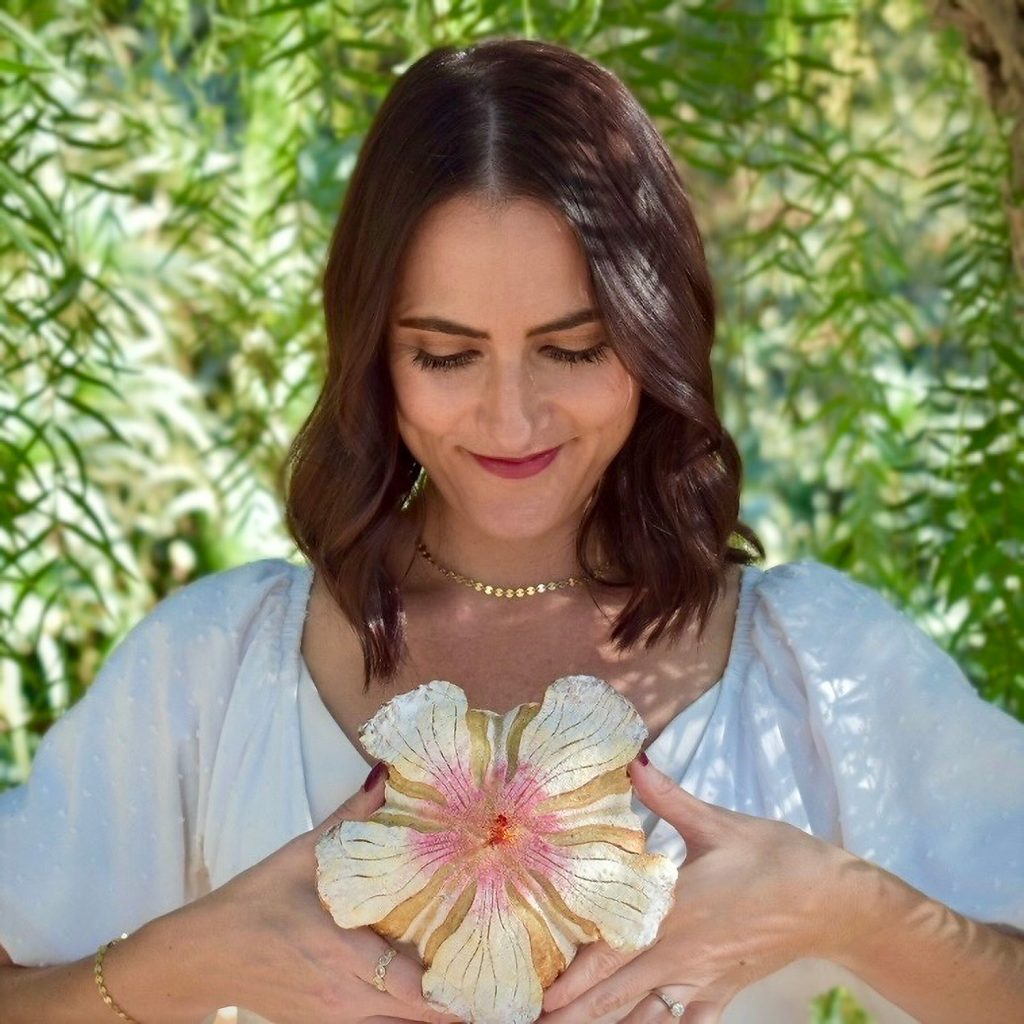
In un tempo dove tutto corre e tutto appare, Katrina ci ricorda che la bellezza ha bisogno di cura, e la cura ha bisogno di tempo.
Chi ha letto il nostro articolo sul tempo e sul pane (se ve lo siete perso, lo trovate qui), sa già quanto ci stia a cuore la dimensione lenta e terapeutica dell’impasto. Con Katrina, questa dimensione si fa colore, si fa gesto artistico, si fa comunità.
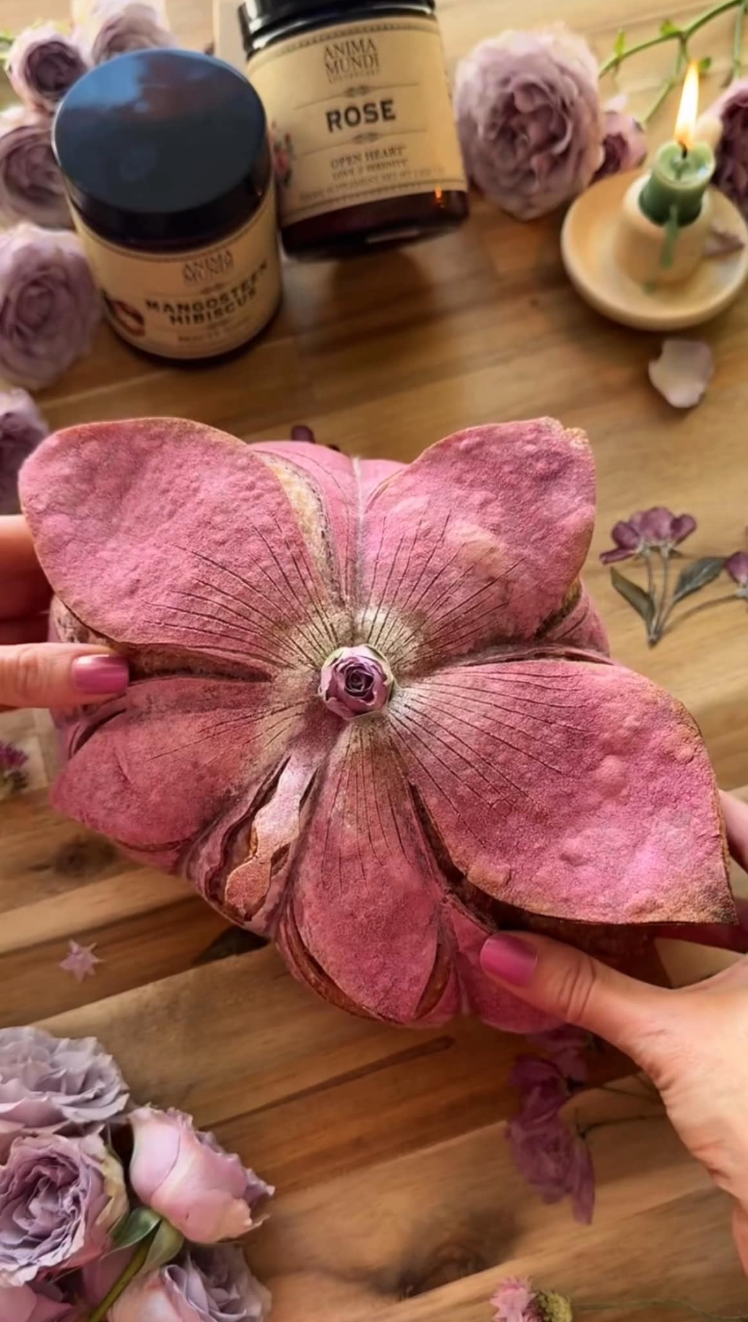
Con il suo approccio femminile, onirico e profondamente autentico, Katrina ci mostra che anche una pagnotta può parlare. E non solo di crosta e mollica: ma di rinascita, di delicatezza, di identità. Laddove molti si fermano all’estetica, chi ha davvero qualcosa da dire lo fa in modo inconfondibile. Perché le idee non si esauriscono, e ogni creazione è solo una delle mille voci di uno stesso stile. Ci sono tante copie, ma l’originale si riconosce sempre. Katrina non ha bisogno di proclami: le basta un fiore inciso, un tocco di lilla, e la sua firma è già lì.
Siamo felici di darle ufficialmente il benvenuto all’interno de La Casa del Lievito. Il suo arrivo tra noi è motivo di entusiasmo: ci auguriamo che possa presto iniziare a condividere le sue creazioni con la comunità, arricchendola con il suo tocco distintivo e la sua visione. Se ancora non la conoscete, potete seguirla su Instagram o sul suo sito www.thesourdoughmama.com.
Ulteriore motivo del mio personale entusiasmo è il fatto che, oltre ad essere moderatrice del gruppo, sono — da tempo — una grande ammiratrice del lavoro di Katrina. La seguo da tanto e sono sempre rimasta affascinata dalla sua creatività, dal suo modo di rendere ogni pane non solo un gesto estetico, ma un dono intimo e riconoscibile. C’è qualcosa nel suo universo visivo che mi parla da subito, forse perché, come lei, ho un debole dichiarato per tutto ciò che è rosa, curato e profondamente personale.
Abbiamo avuto il piacere di incontrare, attraverso queste dieci domande, non solo l’artista del pane che già conoscevamo, ma anche l’anima colorata che ne è il cuore.
- Cominciamo dall’inizio.
Puoi raccontarci come hai scoperto il mondo del lievito madre e cosa ti ha affascinato di più?
Ho scoperto il lievito madre poco dopo la nascita di mia figlia, Sophia, nel 2021. Ero profondamente colpita dalla depressione post-partum e avevo bisogno di uno sfogo—un modo per sentirmi di nuovo me stessa. Un giorno, mentre scorrevo Instagram, mi sono imbattuta nel mondo dell’arte del pane con lievito madre. Sono rimasta subito affascinata sia dalla sfida che dalla bellezza di tutto ciò. Quella stessa settimana ho preso il mio primo starter e ho iniziato a impastare, impaziente di creare pagnotte da decorare con motivi intricati. - Le tue pagnotte sono vere opere d’arte.
Come hai sviluppato il tuo stile unico di scoring e cosa ispira le tue scelte decorative?
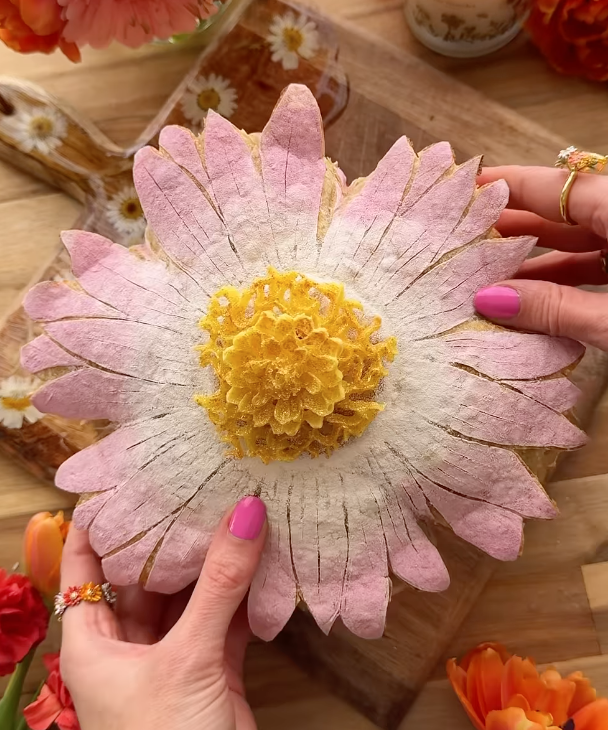
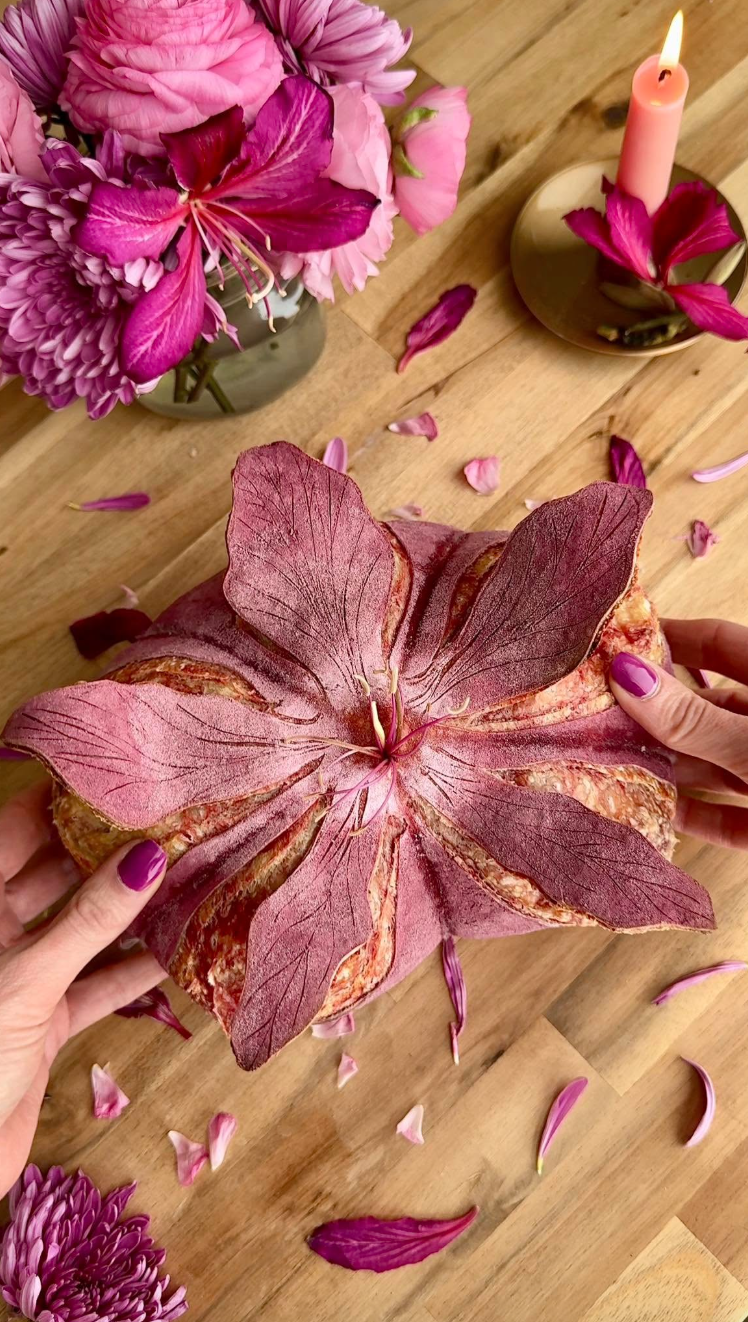
Sono sempre stata attratta dall’arte femminile e fiabesca, ma molte delle mie ispirazioni vengono dalle passeggiate con mia figlia. Amiamo entrambe i fiori, e spesso ne raccolgo alcuni da portare a casa per disegnarne i motivi. Ho capito che i fiori hanno bisogno di profondità per sembrare realistici, così ho iniziato a sperimentare comprimendo il pane con dei fili per creare livelli.
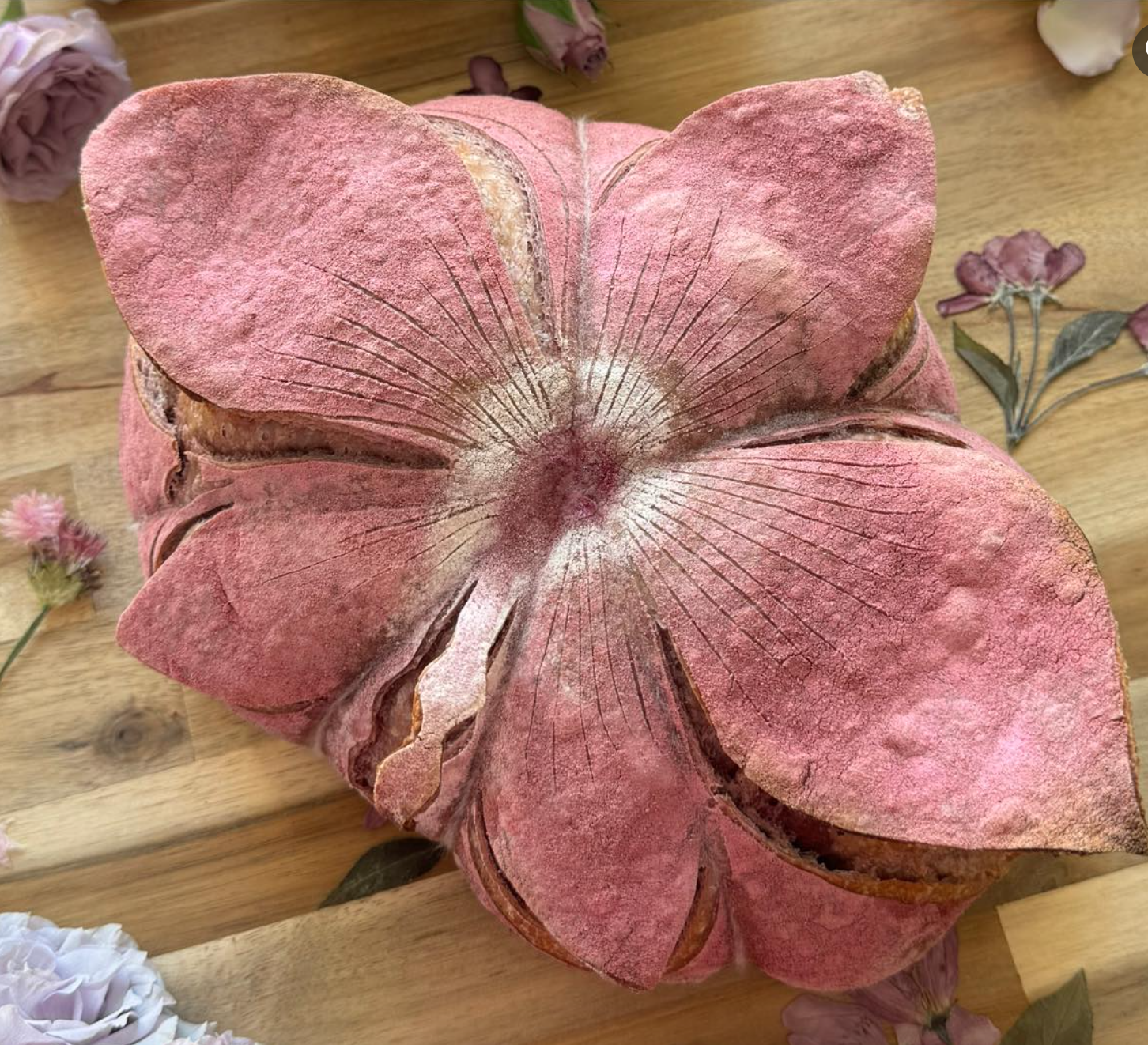
Disegno la maggior parte dei miei motivi in anticipo e rifletto con attenzione sulla logistica—come creerò i colori (cerco sempre di usare solo quelli naturali), dove incidere, e come usare i fili per gli elementi tridimensionali. C’è molta pianificazione, ma è ogni volta una gioia creativa. - Il colore ha un ruolo importante nelle tue creazioni.
Cosa ti spinge a usare coloranti alimentari naturali nel pane, e come bilanci estetica e purezza degli ingredienti?
Amo la sfida! I colori naturali possono essere difficili da gestire con le alte temperature della cottura perché spesso i pigmenti svaniscono. È una vera emozione quando scopro qualcosa che resiste bene al forno. Sento che aggiunge un ulteriore livello alla mia arte—aumentando sia la difficoltà che la soddisfazione. Inoltre, poiché la mia famiglia ed io mangiamo ogni pagnotta, è sempre stato importante per me usare ingredienti naturali e sani. - Impastare a mano è un rituale per molti panificatori.
Perché preferisci farlo a mano anziché usare una macchina, e come influenza il tuo legame con l’impasto?
Per me, sentire l’impasto è incredibilmente importante—spesso mi dice più di quanto possano fare gli indizi visivi. Quando impasto a mano, posso capire quando tutto è ben incorporato e quando ho sviluppato abbastanza estensibilità nell’impasto. Posso anche determinare se serve più acqua, dato che la farina può variare da sacco a sacco, anche se è della stessa marca. A volte trovo che un lotto sia più “assetato”. Anche con la stessa percentuale di idratazione, sento letteralmente il bisogno di aggiungere più acqua e regolo di conseguenza.
Come ha influenzato il tuo percorso di panificazione la condivisione online della tua passione, e cosa rappresenta per te questa comunità?
Significa che non mi sento sola—ed è ENORME. Chiamo tutti nella mia community la mia “famiglia del pane”. Anche se molti di noi non si sono mai incontrati di persona, sembra di avere un legame reale. È un gruppo molto unito, e avere la loro amicizia, saggezza e supporto significa tutto per me. - Dietro ogni pagnotta c’è una storia.
C’è una creazione che ha per te un significato speciale o un momento memorabile legato al pane che vorresti condividere?
Ho una pagnotta preferita che ho appena ricondiviso QUI. Ho avuto modo di tornare a casa e insegnare a mia mamma come preparare un pane al limone e mirtilli. È stato così divertente da preparare e nel video si vedono anche alcuni membri della mia famiglia. È bellissimo!
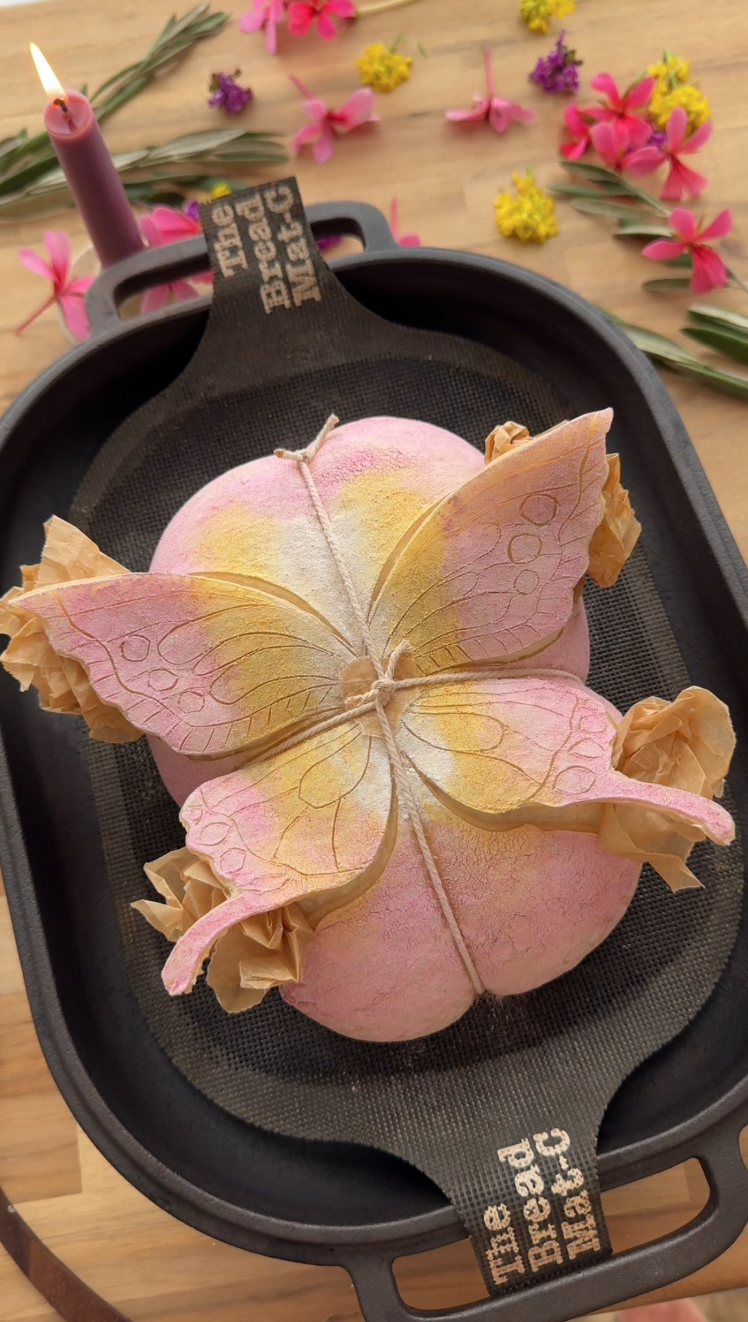
Ci sono anche alcuni design che mi sono rimasti impressi—soprattutto quelli di cui non ero sicura. Ricordo di aver letteralmente saltato di gioia quando ho sollevato il coperchio della pentola e ho visto la mia pagnotta con l’orchidea nera e il teschio di Halloween. Quelle sorprese emotive restano con te. E ovviamente, la mia pagnotta con la farfalla viola è quella che mi ha resa famosa quando è diventata virale. Ricordo che la stavo cuocendo e sia io che mio marito pensavamo sembrasse “sanguinante”! Ma il mondo ha risposto in modo così caloroso che mi ha cambiato la vita, permettendomi di iniziare a fare della panificazione e della creazione di contenuti una carriera. - Il lievito madre può essere meditativo, persino trasformativo.
Cosa ti ha insegnato questa pratica su te stessa, e come ha influenzato la tua vita al di fuori della panificazione?
Mi ha insegnato ad avere di nuovo fiducia in me stessa e mi ha ricordato che ho qualcosa di prezioso da offrire agli altri. Il lievito madre ha plasmato molti aspetti della mia vita—è diventato il mio sbocco creativo, un modo per esprimermi, e perfino la mia carriera. Ora posso condividerlo con il mondo attraverso i miei corsi, eBook e workshop, ed è estremamente gratificante. - Il tuo pane “Fairy Pumpkin” ha conquistato molti.
Cosa ti ha ispirata a crearlo, e come inserisci elementi fiabeschi nelle tue creazioni?
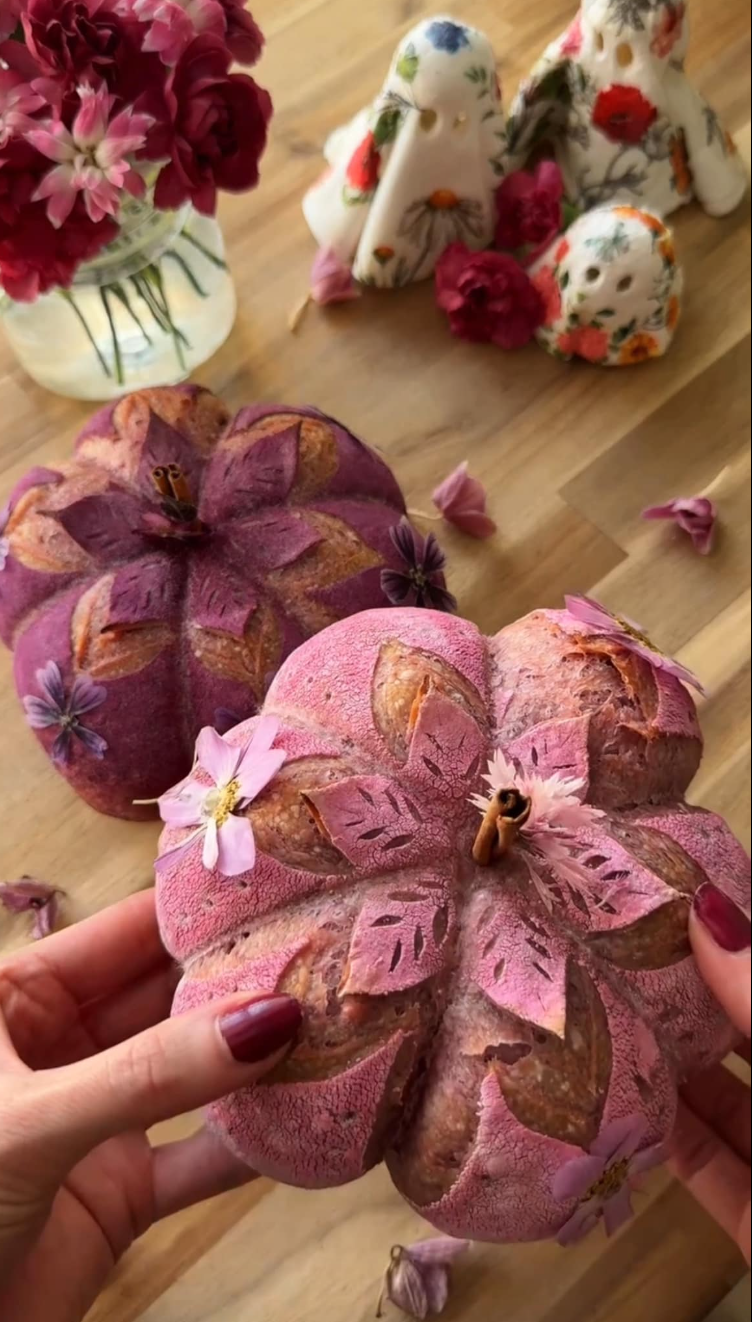
In autunno ci sono sempre tantissimi design a tema zucca, ma volevo creare qualcosa di più femminile—qualcosa che sembrasse incantato, ispirato sia dalla fantasia che dalla natura. Sapevo che usando rosa e viola delicati avrei completamente trasformato l’aspetto tradizionale, e una volta deciso di aggiungere fiori commestibili, dovevano essere zucche per le fate! Sono cresciuta ossessionata dalle fate, dagli unicorni e da tutto ciò che è magico—e quell’amore emerge ancora oggi nella mia arte, soprattutto attraverso le storie che racconto nei miei pani. - Hai detto che lo scoring del pane è per te sia terapia che arte.
Puoi spiegarci meglio in che modo questa pratica influisce sul tuo benessere e sulla tua creatività?
Quando incido, non posso pensare ad altro. Devo essere completamente immersa nel momento. Per una persona che ha costantemente liste, cose da fare e idee da gestire, quella pausa è incredibilmente magica. Accendo la musica e creo. È un dono ogni volta che posso impastare. È estremamente terapeutico! - Domande a raffica!
Farina preferita con cui lavorare? Bob’s Red Mill Artisan Bread Flour
Strumento da forno più sottovalutato? Spargifarina
La prima parola che ti viene in mente quando pensi all’impasto? Tela 🥰
Ringraziamo di cuore Katrina per il tempo che ci ha dedicato, per la sua generosità nel raccontarsi e per l’energia creativa che, come sempre, è riuscita a trasmettere con grazia contagiosa.
Tutte le immagini presenti in questo articolo sono di proprietà di Katrina Niesen | The Sourdough Mama, che le ha gentilmente condivise con noi. È vietato l’utilizzo, la riproduzione o la diffusione non autorizzata di tali contenuti.
© Tutti i diritti riservati.
[ENGLISH]
THE SOURDOUGH MAMA: WHERE DOUGH BECOMES WONDER ✨
Some people bake to feed. Others to impress. And then there are people like Katrina, known online as The Sourdough Mama (Instagram: @the.sourdough.mama, followed by over 280,000 people), who bake to heal. Somewhere between a slow gesture and a sharp blade, between shades of pink and the perfect curve of a crumb, lies an entire world. This isn’t just bread: it’s expression, presence, rebirth.
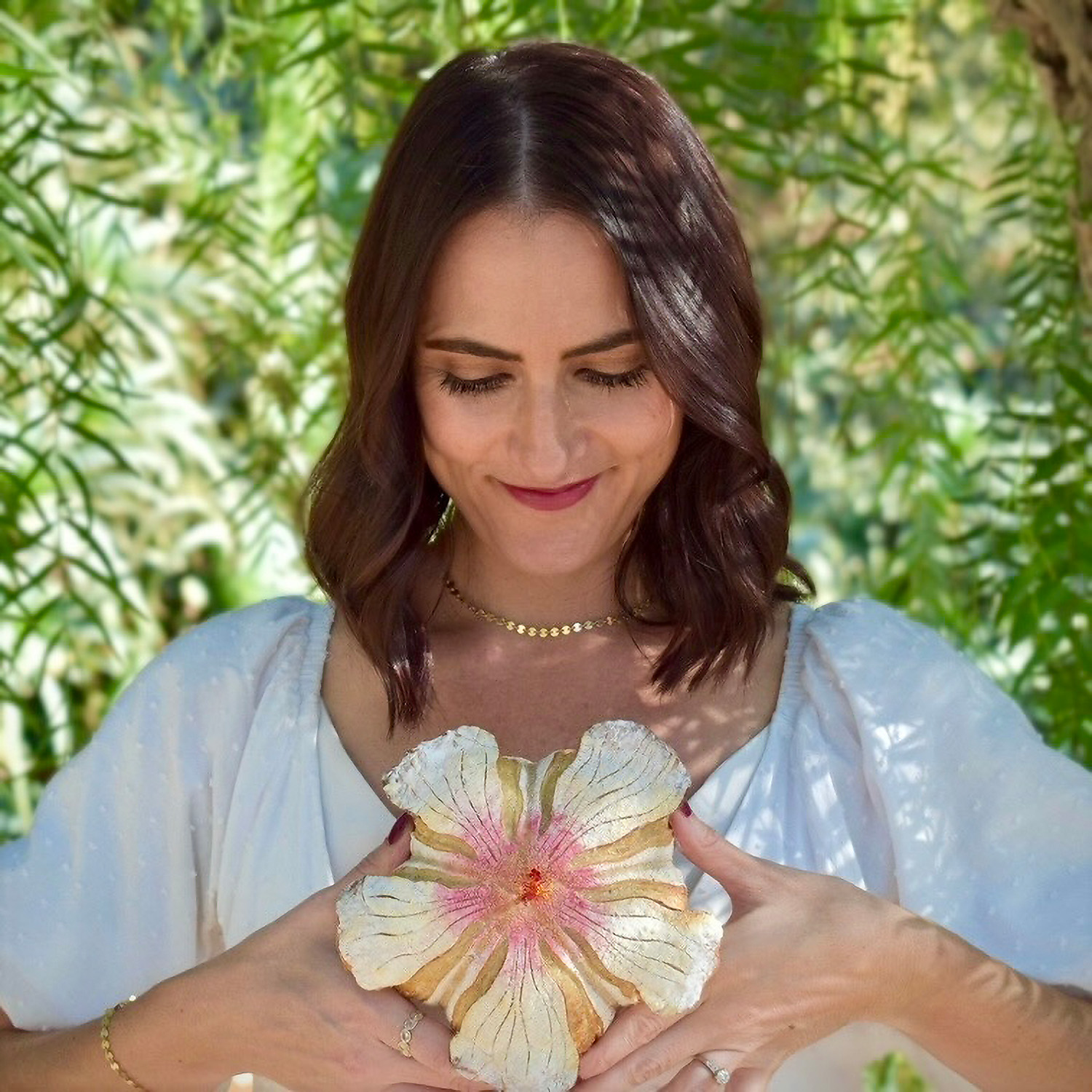
In an age where everything moves fast and strives to be seen, Katrina reminds us that beauty takes care — and care takes time.
If you’ve read our piece on the time bread teaches us (you can find it here), you already know how much we care about the slow, therapeutic dimension of dough. With Katrina, that dimension becomes color, artistry, and community.
Her dreamy, feminine, and deeply authentic style illustrates that even a loaf of bread can speak — not just of crust and crumb, it can represent tenderness, renewal, and personal identity. While many focus solely on aesthetics, those who have something meaningful to express do so in a profound way. Ideas don’t run out, and each creation is just one of many voices in a coherent, unmistakable style. There are many imitations, but the original stands out. Katrina doesn’t need to announce herself: a single etched flower or stroke of lilac is already her signature.
We’re thrilled to welcome her officially into La Casa del Lievito. Her presence is a source of joy and inspiration, and we hope she’ll soon begin sharing her creations with the community. If you’re not following her already, find her at www.thesourdoughmama.com and on Instagram.
On a personal note, beyond my role as group moderator, I’ve long been a huge admirer of Katrina’s work. I’ve followed her for years, always enchanted by her creativity and by the way she turns every loaf into something both visually refined and deeply personal. There’s something in her visual language that speaks to me instantly — perhaps because, like her, I’ve always had a soft spot for everything pink, delicate, and beautifully curated.
Through these ten questions, we had the pleasure of meeting not only the bread artist we already admired, but also the colorful soul at the heart of it all.
- Let’s start from the beginning.
Could you share the story of how you discovered sourdough baking and what captivated you about it
I discovered sourdough shortly after giving birth to my daughter, Sophia, in 2021. I was deeply affected by postpartum depression and needed an outlet—a way to feel like myself again. One day, while scrolling Instagram, I stumbled upon the world of sourdough bread art. I was immediately captivated by both the challenge and beauty of it. That same week, I got my first starter and began baking, eager to create loaves I could score with intricate designs. - Your loaves are truly works of art.
How did you develop your unique scoring style, and what inspires your decorative choices?
I’ve always been drawn to whimsical, feminine art, but a lot of my inspiration comes from walks with my daughter. We both love flowers, and I often pick some to bring home and sketch designs from. I realized that flowers need depth to look right so I began to experiment with compressing the bread using strings to create levels. I sketch most of my designs ahead of time and think carefully through the logistics—like how I’ll create the colors (I strive to use only natural ones), where to place scores, and how to use string for 3D elements. There’s a lot of planning, but it’s joyful and creative every time. - Color plays a significant role in your creations.
What draws you to use natural food colorants in your bread, and how do you balance aesthetics with ingredient purity?
I love the challenge! Natural colors can be tricky to work with at higher baking temperatures because the pigments often burn off. It’s such a thrill when I discover something that holds up beautifully in the oven. I feel it adds an extra layer to my art—elevating both the difficulty and the reward. Plus, since my family and I eat every loaf, it’s always been important to me that we’re consuming ingredients that are natural and wholesome. - Hand mixing is a ritual for many bakers.
Why do you prefer hand mixing over machines, and how does this choice influence your connection with the dough?
For me, feeling the dough is incredibly important—it often tells me more than visual cues ever could. When I mix by hand, I can tell when everything is fully incorporated and when I’ve built enough extensibility in the dough. I can also determine if it needs more water since flour can vary from bag to bag even if it’s the same brand. Sometimes I find a particular batch is more “thirsty.” Even with the same hydration percentage, I literally feel the need to add more water and adjust accordingly.
How has sharing your passion online shaped your baking journey, and what does this community mean to you?
It means I don’t feel alone—and that’s HUGE. I refer to everyone in my community as my bread family. Even though many of us haven’t met in person, it feels like a true bond. It’s such a tight-knit group, and having their friendship, wisdom, and support means the world to me. - Behind every loaf, there’s a story.
Is there a particular bake that holds special meaning for you, or a memorable “bread moment” you’d like to share?
I have a favorite bake that I just recently re-shared HERE. I was able to travel home and teach my mama how to make a lemon blueberry sourdough. The bake was so fun and there is family popping in and out of the video. It’s beautiful! - There have also been a few designs that stand out to me—especially the ones I wasn’t sure would work. I remember literally jumping up and down when I lifted the lid off my Dutch oven and saw my black orchid loaf and Halloween skull design. Those emotional surprises stay with you. And of course, my purple butterfly loaf is what put me on the map when it went viral. I remember baking it and both my husband and I thought it looked like it was bleeding! The world responded so warmly to it though and it changed my life, allowing me to begin baking and content creation as a career.
- Sourdough can be meditative, even transformative.
What has this practice taught you about yourself, and in what ways has it shaped your life outside of baking?
It’s taught me to be confident again and reminded me that I have something valuable to offer others. Sourdough has shaped so many aspects of my life—it’s become my creative outlet, a way to express myself, and even my career. I now get to share it with the world through my courses, eBooks, and workshops, which has been incredibly fulfilling. - Your “Fairy Pumpkin” loaf has captivated many.
What inspired this creation, and how do you approach incorporating whimsical elements into your bakes?
In the fall, there are always so many pumpkin-themed designs, but I wanted to create something more feminine—something that felt whimsical, inspired by both fantasy and nature. I knew that using soft pinks and purples would completely transform the traditional look, and once I decided to add edible flowers, they had to be pumpkins for fairies! I grew up obsessed with fairies, unicorns, and all things magical—and that love still shows up in my art today, especially through the stories I tell in my bakes. - You’ve mentioned that sourdough scoring serves as both therapy and art for you. Could you elaborate on how this practice influences your well-being and creativity?
When I score, I can’t think about anything else. I have to be completely immersed in the moment. As someone who’s constantly juggling lists, to-dos, and ideas, that pause is incredibly magical. I turn on music and just create. It feels like a gift every time I get to bake. It is extremely healing! - Quick-fire round!
Favorite flour to work with? Bob’s Red Mill Artisan Bread Flour
Most underrated baking tool? Flour Duster
First word that comes to mind when you think of “dough”? Canvas 🥰
We sincerely thank Katrina for her time, her openness, and the creative energy she shared with us — as always, with contagious grace.
All images featured in this article are the property of Katrina Niesen | The Sourdough Mama, kindly shared with us for this publication. Unauthorized use, reproduction, or distribution is strictly prohibited.
© All rights reserved.
 La Casa del Lievito - Corsi di panificazione
Grazie per questa bellissima intervista con Katrina Niesen Che non conoscevo.
Sono rimasta affascinata, inizierò a seguirla. Un lievitato per me è sempre una paesia, le decorazioni dei suoi pani sono magia
Grazie Manu
Grazie Manu! Sono d’accordo con te!